
3 min
By Noah ROGNON, October 23, 2024
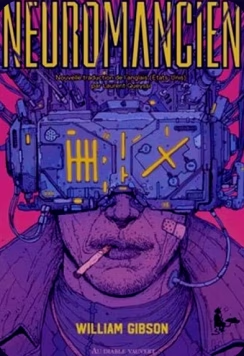
Published in 1984 by William Gibson, Neuromancer is a groundbreaking cyberpunk novel that not only anticipated the emergence of artificial intelligence but also explored how technology could change humanity's perception of itself. This book boldly examines the evolution of prosthetics and technologies that could one day not only compensate for disabilities but also enhance natural human capabilities.
The story of Neuromancer follows Case, a fallen hacker in a future where technology dominates every aspect of human life. In this universe, prosthetics and body modifications are commonplace, allowing characters to transcend the limits of their physical bodies. The novel delves into the fusion of man and machine in a world where artificial intelligence and cyberspace redefine reality.
“In a future dominated by technology, the distinction between man and machine becomes blurred.”
In Neuromancer, William Gibson introduces the concept of "human augmentation," where technology is not limited to repair but also improves. Prosthetics and technological implants become extensions of the individual, offering capabilities beyond the purely human. Gibson invites us to consider the ethical and philosophical implications of this evolution: how far is humanity willing to go to surpass its own limits?
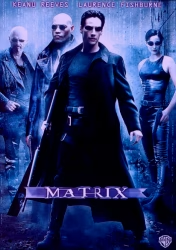
Thomas Anderson, a programmer in an administrative service by day, becomes Neo by night, a hacker sought in cyberspace. Torn between two worlds, he is haunted by strange dreams and cryptic messages from Morpheus, urging him to uncover the mystery of the Matrix.
In a cybernetic future, a cyborg seeks to uncover her identity while battling threats that challenge her very humanity.

Cyberpunk 2077 is an action-RPG set in the dystopian Night City. Players embody V, a mercenary whose choices shape the story, exploring themes of cybernetics, identity, and corporate power.

By envisioning a world where prosthetics are not only functional but also enhance human capabilities, Neuromancer offers a reflection that remains relevant today. The novel suggests that while technology can be extremely beneficial, it can also create new forms of inequality and dependency. The link between humans and machines grows increasingly complex as technology progresses.